
TEACHERS
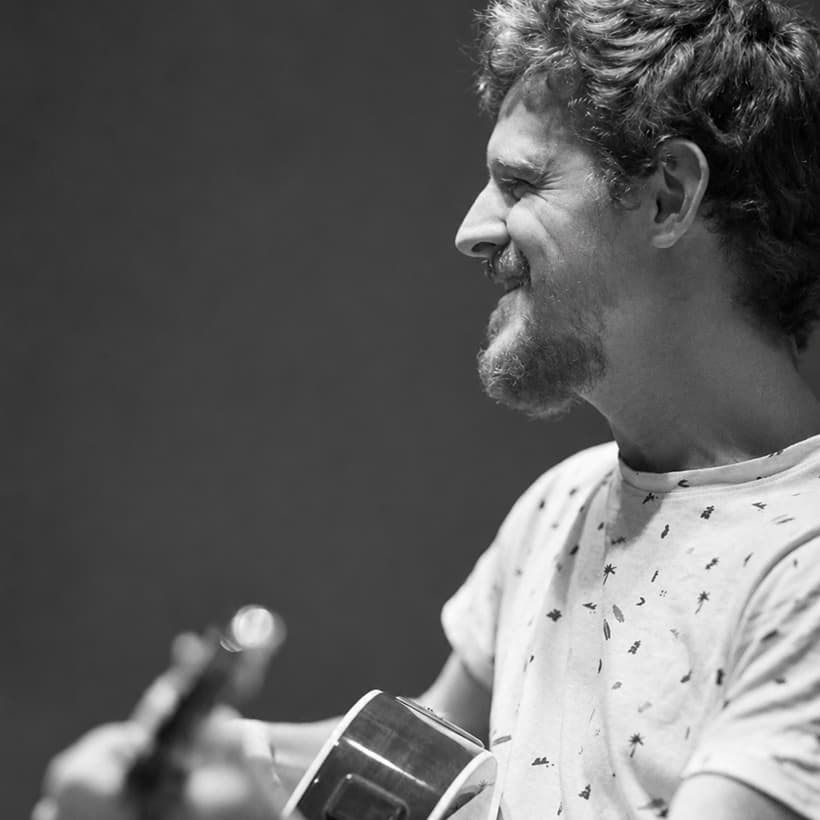
MATÍAS
URIBE
Decolonising Yoga · Lineages, Gurus and Power Structures · Yoga Is Political · Towards an Unruly Yoga
Matías Uribe Ramírez began his yoga journey almost twenty years ago, a path that transformed his relationship with the body, existence, power and community.
With the intention of building collective strength around an anti-colonial and inclusive approach to yoga, he wrote El Rizoma del Yoga and founded Redoma Yoga, a research, education and practice project that proposes a critical and deeply human perspective, distancing itself both from the commodification of well-being and from spiritual authoritarianism.
Yoga taught him to question those versions of the practice that forget real people. The global industry has promoted normative bodies, depoliticised spirituality and practices turned into commodities. But there are also coercive organisations disguised as spiritual schools, where psychological manipulation, personality cults and cult-like dynamics replace any genuine pursuit of freedom.
His experience within DeROSE, an international coercive organisation that presents itself as “the most ancestral training in the world”, allowed him to understand how spiritual discourse can be used to control, isolate and emotionally subjugate people. Leaving meant questioning deeply ingrained beliefs and reaffirming the importance of critical thinking, autonomy and collective care.
For Matías, therefore, talking about inclusive yoga cannot be limited to physical accessibility: it requires building emotionally safe spaces, free from abuse, elitism and manipulation, where nobody has to feel inadequate or submit to an authority in order to belong.
He has found the deepest experiences of yoga in spaces shaped by vulnerability, diversity and human resilience.
In times of loneliness, exhaustion and exclusion, he believes that building more humane, critical and inclusive communities is one of the most urgent tasks facing contemporary yoga.
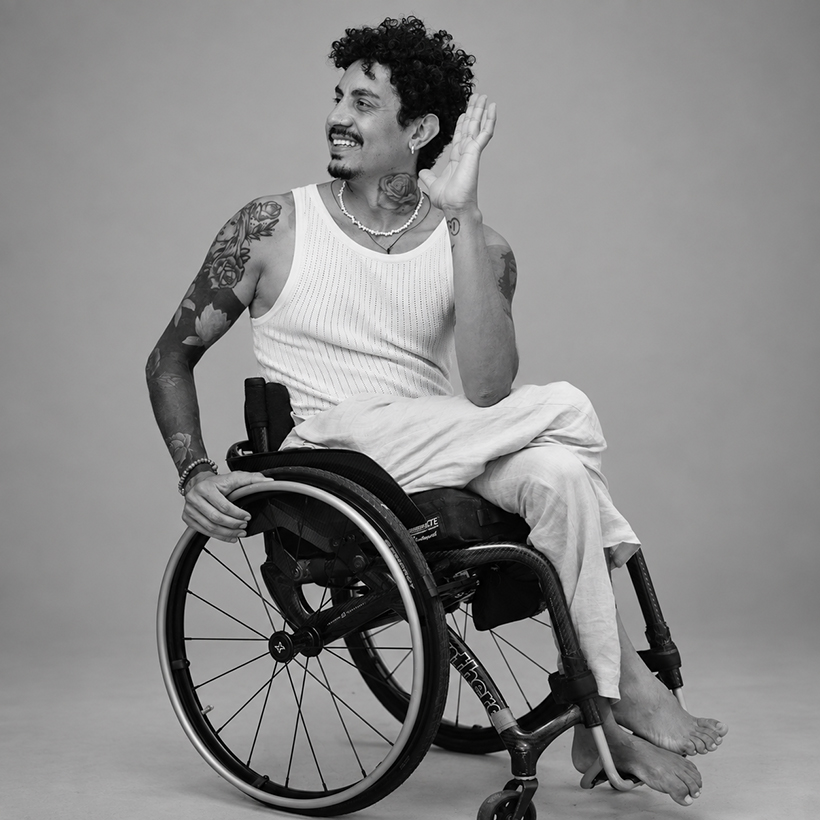
RODRIGO
SOUZA
Inclusive and Accessible Yoga · Diverse Bodies and Social Norms · Who Gets to Practise Yoga, and Whom Does It Belong To? · Building Inclusive Communities
Rodrigo Souza (he/him) is an accessible and adaptive yoga teacher, educator and disability rights activist, internationally recognised for his commitment to a more inclusive and humane vision of yoga.
In 2026, Yoga Journal USA recognised him as one of the eight teachers shaping the future of yoga.
A wheelchair user following a spinal cord injury, his relationship with yoga became a journey back to his own body, an experience that continues to shape the way he teaches, supports others and advocates for greater accessibility in yoga spaces.
Through Allihopa Yoga and his Brazilian initiative Lhe Tenho Amor, Rodrigo teaches people with diverse bodies and life experiences, and trains yoga teachers and healthcare professionals to facilitate practices grounded in dignity, autonomy, belonging and care. He also works as a mentor and training facilitator at Accessible Yoga School.
At the heart of his work lies a simple conviction: yoga does not belong to just one type of body. It is a practice of belonging, and every body deserves to feel welcome.
Beyond teaching postures, Rodrigo dedicates his life to transforming the way we understand yoga: not as a practice reserved for a select few, but as a path of care, belonging and freedom for all bodies.
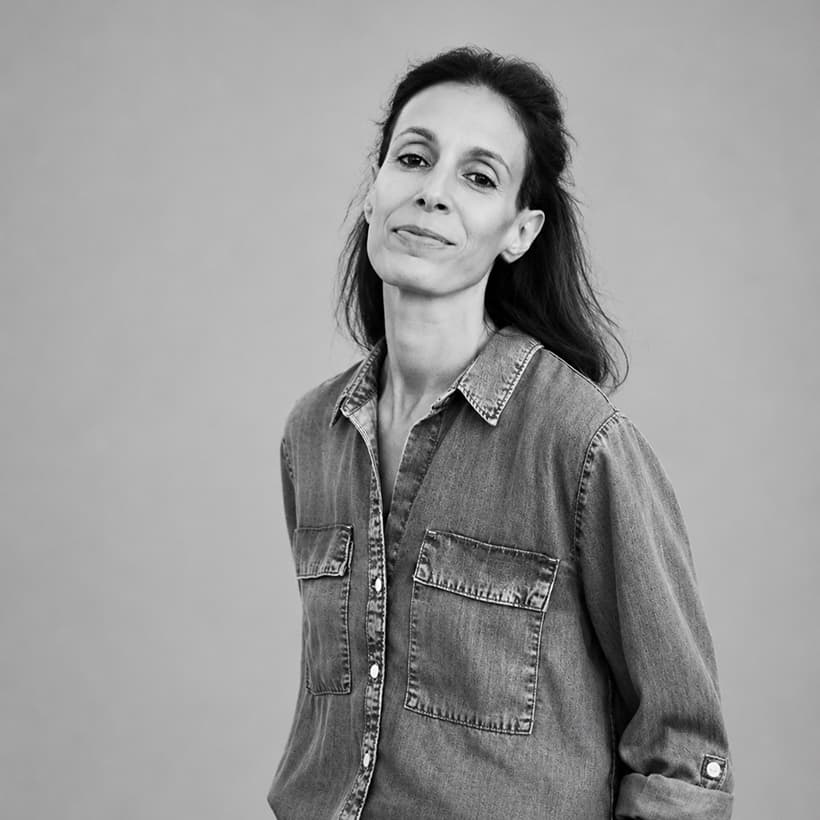
CANDIDA
VIVALDA
Embodied Activism and Social Context · Theory and Practice of Compassion in Action · Trauma-Sensitive Tools and Practices for Yoga Sessions
Originally from Rome, Candida has spent more than twenty years studying and practising yoga and meditation with renowned teachers from different traditions. She has spent extended periods in retreat and in service at ashrams in India, Buddhist monasteries and Christian communities, cultivating a broad understanding of the spiritual path — both contemplative and active.
She is a certified advanced Jivamukti Yoga teacher, a Senior Trauma-Sensitive Yoga facilitator at the Rādika Foundation and an instructor of Brown University’s MBSR (Mindfulness-Based Stress Reduction) programme. She has also completed advanced training in Trauma-Sensitive Mindfulness with David Treleaven and Adaptive and Accessible Yoga with Jivana Heyman and Rodrigo Souza.
Candida has explored compassion from a Buddhist perspective and deepened her understanding through internationally recognised programmes such as Compassion Cultivation Training (CCT) at Stanford University, Compassionate Mind Training (CMT) and Mindful Self-Compassion (MSC). She also completed the Embodied Social Justice programme at The Embody Lab, where she explored the intersections of the body, equity and social transformation.
She trains teachers in Jivamukti Yoga, Trauma-Sensitive Yoga and Meditation, sharing an approach to teaching and practice that brings together depth and purpose, inner silence and committed action. She also facilitates mindfulness and compassion programmes that integrate spirituality, psychology, science and activism.
In recent years, she has provided Trauma-Sensitive Yoga training to more than 60 Ukrainian teachers as part of the “Healing the Wounds of War” programme.
Recently, Candida has rediscovered Christianity through a renewed perspective, drawn to Jesus’ authentic, radical and transformative message as a path of courage and love in action. Her mission is to spread the universal message of compassion — the life force our world urgently needs — as deeply and widely as possible.

JOSE
CARBALLAL
Yoga and Mental Health · Trauma, Self-Knowledge and Personal Transformation · Spirituality and Everyday Life · Yoga and Activism
José began practising yoga in 2000, looking for tools to work with anxiety and improve his posture. After exploring different styles, he discovered Ashtanga Yoga and, in 2002, travelled to Mysore for the first time, where he met his teacher, Sharath Jois, with whom he studied regularly until his passing.
Together with his practice partner, Rafa Martínez, he teaches this method and supports students through their practice and transformation journeys at Mysore House Madrid, alongside a team of teachers trained by them.
His deep interest in and commitment to mental transformation and the spiritual path have led him to engage in a therapeutic process over many years, allowing him to deepen his self-awareness, something he considers fundamental to this journey. He has trained in Gestalt Therapy and Trauma, bringing a deeper understanding of mental and emotional processes into his teaching.
His teaching focuses on profound transformation, supporting practitioners in developing greater awareness and cultivating a form of happiness that may be less obvious, but is more solid and lasting.
José is a committed activist, particularly in the fields of mental health, the fight against oppression and the rights of the Palestinian people. He regularly uses his platforms to speak out against privilege, oppression, war and genocide. For him, there is no yoga without mental health or justice.

GONZALO
BRITO
Psychology of Activism · Emotional Balance and Resistance · Trauma, Power and Collective Resilience · Self-Care as a Political Practice · Towards Conscious and Sustainable Activism
Gonzalo Brito Pons is a clinical psychologist trained at the Pontifical Catholic University of Chile and holds a PhD in Psychology from the Institute of Transpersonal Psychology (United States). For more than twenty years, he has been integrating Western and Buddhist psychology.
His work connects mindfulness, compassion and emotional regulation in clinical, educational and community settings, including projects focused on resilience and collective care within activism.
He is a certified instructor and international trainer in Compassion Cultivation Training (CCT) at Stanford University, offering training in Spanish to mental health and education professionals. Gonzalo specialises in Compassion-Focused Therapy, mindfulness-based applications and trauma prevention, providing practical tools for burnout prevention, emotional balance and compassionate leadership in demanding environments.
He delivers international training programmes on Western and Buddhist psychology, mindfulness, compassion and emotional regulation, for both professionals and the general public. He is the author of several academic and educational publications.
His teaching combines scientific evidence with experiential practice, emphasising ethical, inclusive and culturally sensitive approaches. His work inspires sustainable personal and collective transformation, focused on the well-being of individuals and communities committed to social change.

YOGESWARI
Deconstructing an Activist Yoga Class · Conflict Resolution and Peacebuilding Through Yoga
Yogeswari is an international yoga teacher and former Swiss dancer and choreographer. She discovered yoga at the age of sixteen, during a period of profound cultural and social transformation — the Vietnam War, the Civil Rights and Feminist movements, and school desegregation in the United States. These events, together with her first readings on Hindu and Buddhist philosophy, profoundly shaped her worldview. The principle of Ahimsa (non-violence) became the cornerstone of her life, inspiring her commitment to opposing all forms of discrimination and injustice.
She studied ethnology, theatre and dance in Madrid, Berlin and the United States, and went on to develop a vibrant career in New York’s avant-garde dance scene. Her collaborations and immersion in African and Afro-Caribbean traditions enriched her understanding of rhythm, community and ancestral wisdom, elements that continue to permeate her teaching today.
In 1994, she discovered the Jivamukti Yoga Centre in New York’s East Village. The method’s integration of art, spirituality and activism deeply resonated with her life journey. After completing her teacher training in 1999, she became one of Jivamukti Yoga’s leading senior teachers. For more than two decades, she has taught and trained teachers around the world, leading training programmes, workshops and immersions.
Her teachings present yoga as a path towards inner freedom and collective awakening, rooted in compassion, justice and cultural awareness.
In 2007, she founded the AZAHAR Foundation, a non-profit organisation dedicated to promoting a culture of peace in post-conflict regions through yoga, meditation and the arts. With projects in Cambodia, Rwanda, Ukraine and elsewhere, AZAHAR provides education, scholarships and cultural exchange opportunities. Through this work, Yogeswari continues to build bridges between yoga, human rights and peacebuilding, advocating for a world in which inner transformation drives social change.

CLEM
GENET
Yoga, Feminism and Queer Identities
Clem came to yoga more than ten years ago, from a place of disconnection from their body and with the conviction that they needed to change in order to fit in. For a long time, they experienced the practice through the lens of pressure, comparison and the need to prove something to themselves.
But both yoga philosophy and feminism transformed their perspective. The concept of mokṣa, liberation, invited them to question attachments and the ideas that shape the way we live. Feminism and queer thought helped them understand how gender norms, body ideals and capitalist power structures shape our identities and experiences through systemic oppression.
Their mission is to bring yoga and feminism into dialogue through a critical lens, exploring what each can contribute to the other. They understand liberation not only as an individual pursuit, but also as a collective project, inseparable from the social and political conditions we inhabit.
Trained in Hatha Yoga, Yin Yoga and Inclusive Yoga, their teaching combines tradition with critical thinking. Music, which has accompanied every step of their journey, also holds an essential place in the way they practise and share yoga.
They currently run Morada, a feminist, queer and inclusive yoga studio in the Puerta del Ángel neighbourhood of Madrid, and lead Casa Morada, a digital platform that brings this feminist, accessible and political vision of yoga beyond the walls of their studio. Clem also completed the first edition of the «Yoga for Change» training programme at TYG Academy in 2026.

CLAUDIO
ARAYA
Shared Humanity and Non-Polarisation in Challenging Times: Psychological and Buddhist Perspectives
Claudio Araya Véliz is a clinical psychologist, holds a PhD in Psychotherapy Research from the Pontifical Catholic University of Chile, and is a lecturer and researcher at the School of Psychology of Adolfo Ibáñez University. He is also co-founder of the Shared Humanity Foundation.
His work focuses on developing a relational and enactive perspective on mindfulness and compassion, exploring how to cultivate them in everyday experience and in our relationships. He has worked on applying mindfulness and self-compassion practices in different contexts, including situations of psychosocial vulnerability, bringing these tools to diverse realities and communities.
He is an instructor of the Mindfulness-Based Stress Reduction (MBSR) and Mindful Self-Compassion (MSC) programmes, and director of the Master’s Programme in Relational Mindfulness and Compassion at Adolfo Ibáñez University.
He is the author of El mayor avance es detenerse. Mindfulness en lo cotidiano and Humanidad Compartida, among other books, and co-author, alongside Gonzalo Brito, of Corazón Cálido, Mente Serena, an exploration of the four immeasurable states of mind: love, compassion, empathetic joy and equanimity.

GABRIEL
PENA-BALLESTE
Communication for Social Change · Challenging Dominant Narratives · New Languages and Narratives of Resistance · Theory, Case Studies and Practical Tools
Specialised in Strategic Brand Management and Communication and Digital Business (ESADE), he worked for years in communications and cultural management before making a major personal and professional shift. He is the founder and director of The Yoga Gallery, a movement that promotes yoga as a tool for social transformation. Through this platform, he leads international festivals, creative laboratories and training programmes designed to nurture agents of change through yoga, art and activism. A yoga teacher trained with master Surinder Singh in Rishikesh, he combines spiritual practice with a critical and contemporary perspective on the world.
His journey is inspired by the thought of Jesus of Nazareth as a figure of spiritual rebellion, and by voices who have turned their art or their lives into acts of awareness: Franco Battiato, Tracy Chapman, Lluís Llach, Silvio Rodríguez, as well as Angela Davis and Pepe Mujica.
A poet and writer, he has published several works and contributed to media outlets such as The New Barcelona Post. Throughout his work, Gabriel seeks a common thread: the pursuit of a living truth that brings together body, word and action.

ÓSCAR
CAMPS
Activism and Humanitarian Action · Defending Life in the Face of Institutional Indifference
Óscar Camps is the founder and director of Proactiva Open Arms, a lifeguard, entrepreneur and human rights activist. With more than 25 years of experience in maritime rescue, in September 2015, after learning about the stories of refugees risking their lives crossing the Aegean Sea, he decided to take action in response to the lack of humanitarian assistance. He travelled to the island of Lesbos with a group of volunteer lifeguards to rescue people arriving on its shores while fleeing war, persecution and poverty.
From that initial initiative, Open Arms has grown into a humanitarian organisation dedicated to protecting lives at sea and defending people’s rights. Its work has extended beyond the Mediterranean, also taking part in humanitarian aid missions, such as sending food supplies to Gaza.
Through Open Arms, Camps denounces government inaction, policies that put the lives of migrants at risk and the criminalisation of rescue organisations. His journey represents a form of activism that turns indignation into action: saving lives, exposing injustice and defending the principle that human rights must never depend on borders or political interests.

OLGA
RODRÍGUEZ FRANCISCO
Journalism and Human Rights · A critical perspective on global conflicts and injustices
Olga Rodríguez Francisco is a Spanish journalist, writer and researcher specialising in international affairs, the Middle East and human rights. She holds a degree in Journalism from the Complutense University of Madrid and a postgraduate specialisation in Middle Eastern Conflicts from UNED.
She has built her professional career at media outlets such as Cadena SER, Cuatro and CNN+, and is a co-founder of elDiario.es. As a correspondent and special envoy, she has covered some of the major international conflicts of recent decades, including the invasion and occupation of Iraq, the conflicts in Afghanistan and Syria, the 2011 Arab uprisings and the situation in the occupied Palestinian territories. She has also investigated human rights violations, migration and the refugee crisis.
She is the author of books including “El hombre mojado no teme la lluvia. Voces de Oriente” Medio (2009) and “Yo muero hoy. Las revueltas árabes” (2012). Her journalistic work has received numerous awards, including the collective Ortega y Gasset Award for coverage of the invasion of Iraq and the Journalism and Human Rights Award from the Spanish Association for Human Rights. She is also a member of the board of UNRWA Spain, the United Nations agency for Palestine refugees.
